

Abstract
Chronic Myeloid Leukemia (CML) is a haematologic malignancy effectively managed with tyrosine kinase inhibitors (TKIs). However, social and financial barriers often limit optimal treatment, especially in low-resource settings like Bangladesh. This study aimed to evaluate the knowledge, attitudes, and practices (KAP) of CML patients regarding TKI therapy and identify barriers to treatment. Conducted in the Haematology Department of North East Medical College Hospital from January 2023 to December 2024, this cross-sectional study included 50 patients. Data were collected using structured interviews and analyzed for associations between sociodemographic variables and treatment adherence. Findings revealed significant gaps in knowledge about CML and its management, as well as financial constraints and cultural misconceptions impacting adherence. Addressing these barriers is essential for improving outcomes in CML patients.
Introduction
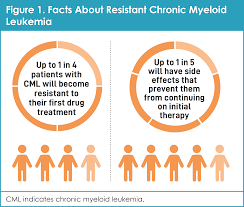
Chronic Myeloid Leukemia (CML) accounts for 15–20% of adult leukemias worldwide, with tyrosine kinase inhibitors (TKIs) revolutionizing its management. Despite advancements, achieving optimal treatment outcomes in resource-limited settings like Bangladesh remains challenging. Social stigma, financial difficulties, and inadequate knowledge among patients are critical barriers to adherence to TKI therapy. This study explores the KAP of CML patients regarding TKI treatment to identify actionable strategies for overcoming these barriers.
Objectives
- To assess the knowledge, attitudes, and practices of CML patients about TKI therapy.
- To identify social and financial barriers to optimal TKI treatment.
- To recommend strategies to improve adherence and outcomes in CML management.
Methodology
Study Design: Cross-sectional KAP study.
Place of Study: Haematology Department, North East Medical College Hospital, Bangladesh.
Study Period: January 2023 to December 2024.
Sample Size: 150 CML patients receiving TKI therapy.
Inclusion Criteria: Diagnosed CML patients aged ≥18 years, on TKI therapy for at least six months.
Exclusion Criteria: Patients with comorbid conditions preventing interviews.
Data Collection: Structured interviews using a pretested questionnaire.
Data Analysis: Statistical analysis using SPSS, with chi-square tests for associations between sociodemographic variables and treatment adherence.
Literature Review
TKIs have transformed CML from a fatal disease to a manageable chronic condition. Studies from low- and middle-income countries highlight barriers such as high drug costs, lack of health insurance, and poor health literacy. In Bangladesh, cultural beliefs and limited healthcare accessibility exacerbate these challenges. The current literature emphasizes the need for targeted interventions addressing these barriers to enhance patient outcomes.
Results
Demographics: Median age of participants was 42 years; 60% were male, and 40% were female.
Knowledge: Only 30% of patients demonstrated adequate knowledge about CML and TKI therapy.
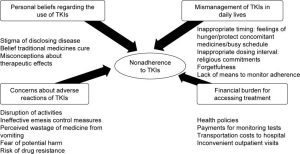
Attitudes: 45% believed CML could be cured without continuous treatment, reflecting cultural misconceptions.
Practices: Non-adherence to treatment was reported in 50% of participants, primarily due to financial constraints (70%) and lack of family support (15%).
Barriers: High drug costs, limited availability of subsidized medications, and stigma surrounding cancer treatment were prevalent.
Discussion
This study highlights significant gaps in patient education, financial accessibility, and societal support for CML management in Bangladesh. Despite global advancements in TKI therapy, financial burdens remain a primary obstacle, with over two-thirds of non-adherent patients citing cost as a barrier. Social stigma and cultural misconceptions further impede adherence. Community-based interventions, such as patient support groups and educational programs, alongside financial assistance through Patient Access Programs (PAP), could address these challenges effectively.
Conclusion
Optimizing TKI treatment for CML patients in Bangladesh requires a multifaceted approach. Improving health literacy, reducing financial barriers, and addressing cultural misconceptions are essential for better patient outcomes. Policymakers and healthcare providers must collaborate to implement sustainable strategies, such as subsidized treatment programs and awareness campaigns.
Limitations
- Single-center study limits generalizability of findings.
- Reliance on self-reported data may introduce recall bias.
- Lack of qualitative data to explore in-depth patient perspectives.